For today’s students, sharing has become second nature. A moment happens, a phone is lifted, and within seconds it belongs not just to those present, but to the world. What once would have faded into memory now lives forever online.
And this is where we must pause.
We often hear that life is about giving — about putting ourselves out there, about expressing who we are. There is truth in that. But there is also wisdom in knowing what should be shared and what should not.
Because not everything we hold is worthy of being scattered.
Across social media, students are not only consuming content, they are producing it. Videos of fights; public humiliation; risky behaviors recorded for laughs, likes, or validation; posts showing drinking, smoking, or intimate moments are shared without thought for privacy, safety, or future consequences.
Even more troubling, some young people have grown desensitized, reposting disturbing images, cruelty, or harmful behaviors, with little concern for the impact. What once shocked now barely registers.
But the internet has no memory loss.
What is shared can be saved.
What is posted can be replayed.
What is scattered can become someone else’s lesson, for better or worse.
Students in remote places, different cultures, and younger age groups are watching, learning, and being shaped by what they see. When harmful behavior is shared casually, it quietly teaches that this behavior is normal… even acceptable.
Here is the uncomfortable truth:
What we share today becomes part of the story we leave behind.
Legacy is not just about achievements or success. It is built daily; post by post, video by video, comment by comment. The question is not “Will this get attention?” but “What does this teach?”
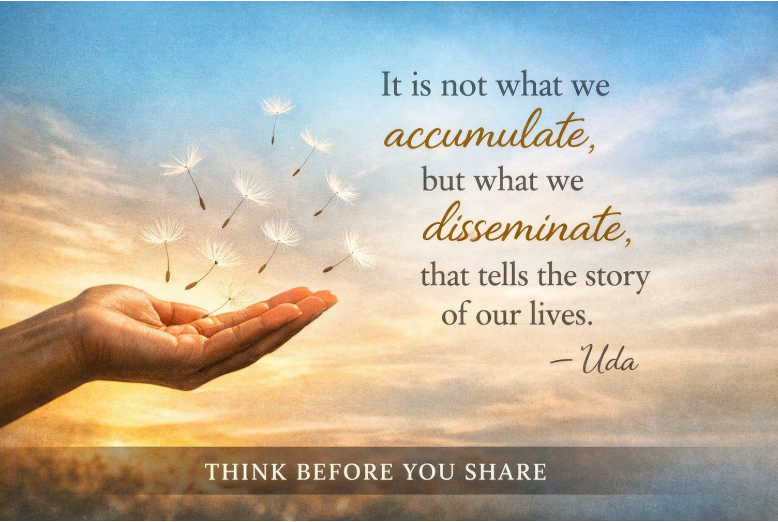
It is not what we accumulate; followers, views, likes; but what we disseminate that tells the story of our lives.
Are we spreading empathy or cruelty?
Truth or misinformation?
Awareness or harm?
Sharing is not inherently wrong. Expression matters. Storytelling matters. Speaking out matters. But discernment matters just as much.
Before posting, we should ask: – Does this harm someone? – Does this glorify destructive behavior? – Does this respect dignity, mine and others? – Would I be comfortable with this representing me years from now?
Farmers don’t scatter seeds carelessly. They choose what to plant, where to plant it, and when. In the same way, we must learn the difference between seeds that grow life and content that spreads damage.
Educators are not just teaching curriculum; they are helping to shape conscience. Digital citizenship must go beyond rules and punishment. Students need space to reflect, to question, and to understand that their voices carry weight far beyond their screens.
Conversations about social media should include:
You matter. Your voice matters. Your ideas matter.
But so does your influence.
You are not just sharing moments; you are shaping culture. What you scatter today may land in places you will never see, affecting people you will never meet.
Choose wisely.
Because in the end, it will not be what we accumulated, but what we wisely disseminated, that speaks for us.